Fine line
Drawn with thin lines. Placement and line weight are settled first, so the work holds up as the years pass.
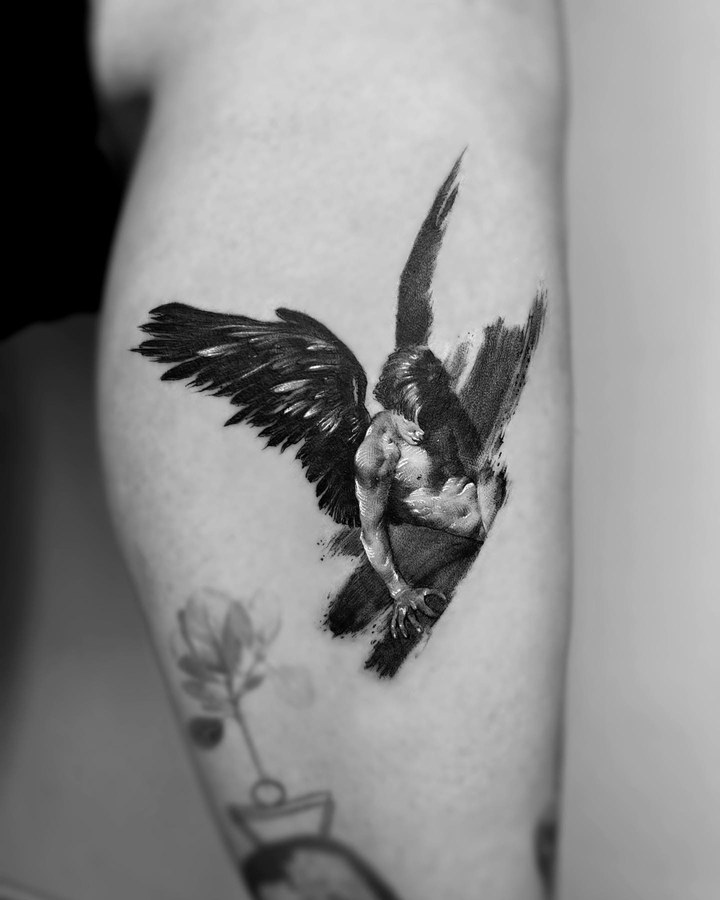
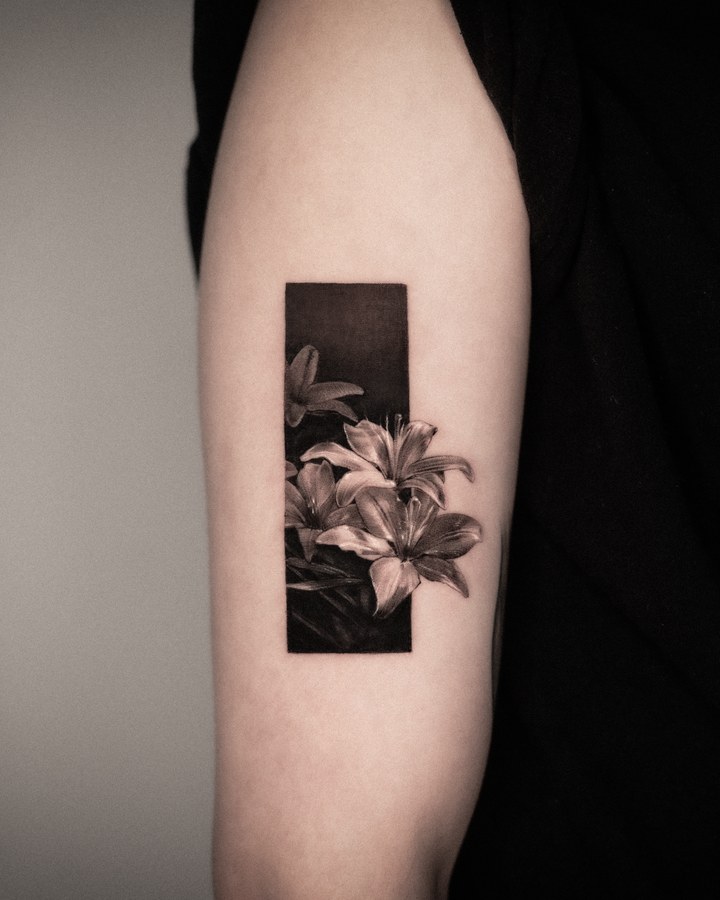
Fine line work builds thin strokes up with a fine needle, so the result stays delicate. It suits everything from minimal designs to florals and lettering, and it sits naturally along the curve of the body. Along with black and grey, it is the main thing I do.
- The line is thin
- What defines fine line work is the weight of the line. The thinner it is the more delicate it looks, and the more room it has to soften over the years.
- Small and simple
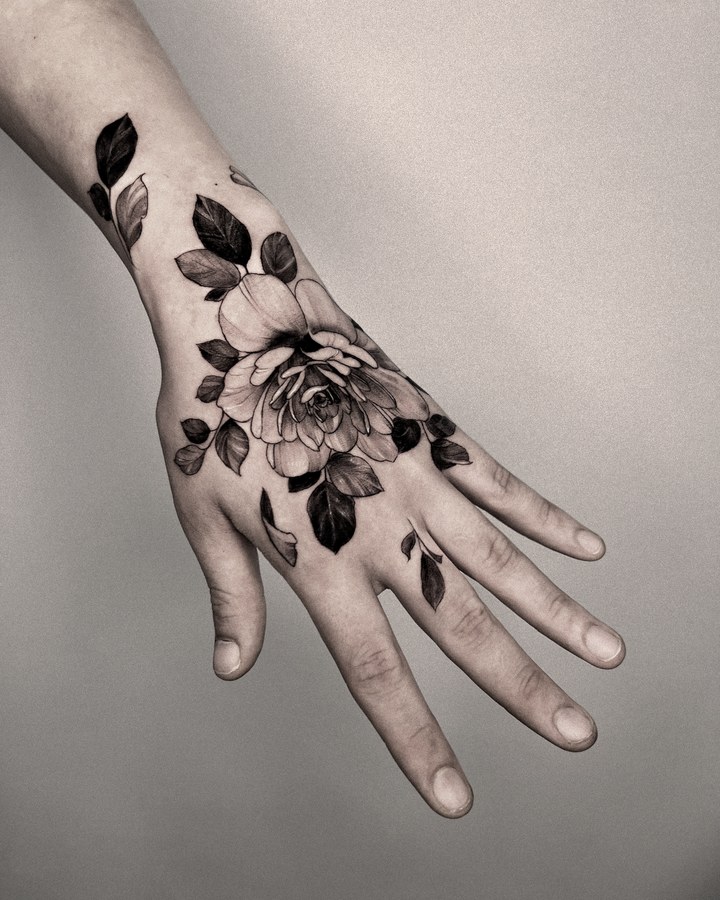
- It suits minimal designs, lettering and plants. A rose on the back of the hand, fine-line lettering, a small bird — that kind of work.
- Quiet on the skin
- The lines are thin, so it does not read from a distance. That is part of why people who would rather not draw attention choose it for a first tattoo.
- Placement
- The wrist, the collarbone and the inner arm — thin, flat skin — are the safe choices. I tend not to recommend fingers, where blurring is common.
- How it lasts
- Thin lines can soften over time. If a studio tells you their fine lines never blur, that is a reason to be careful rather than reassured.
So we agree on a line weight that will survive the years, and work on the understanding that a touch-up may be wanted later.
Please judge the work by photographs taken after healing, not straight after the session. I work by appointment only, in a private studio in Hongdae.
Fine line workOriginal proportions · nothing cropped
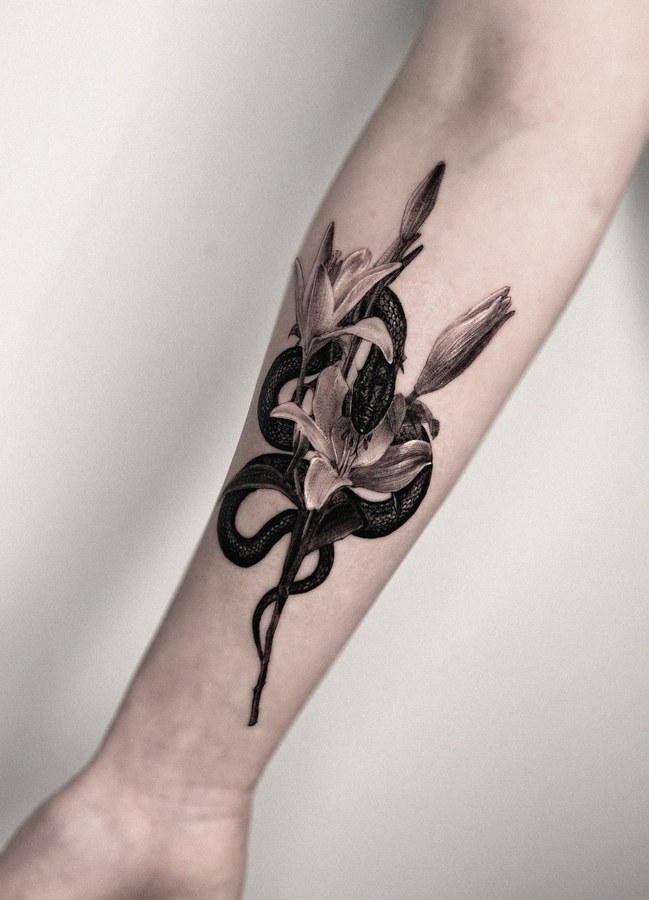
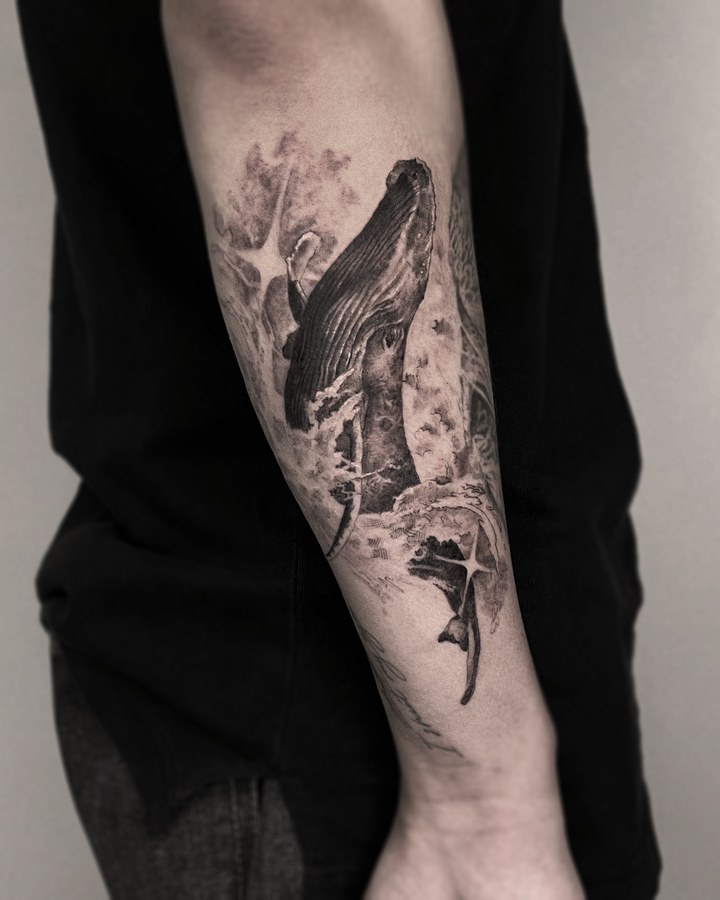
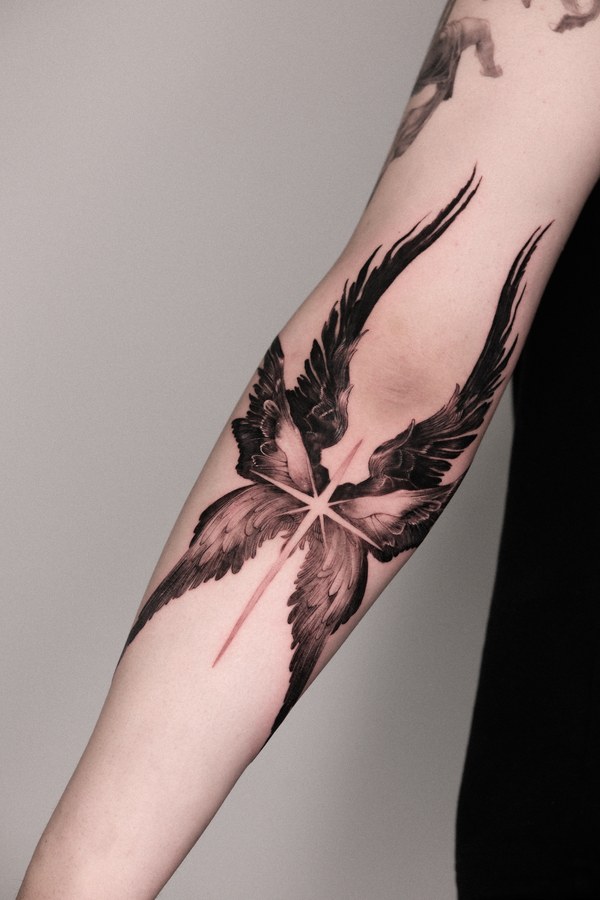
Something you would like in fine line?